Setting Up My First US Bank Account and Credit Card
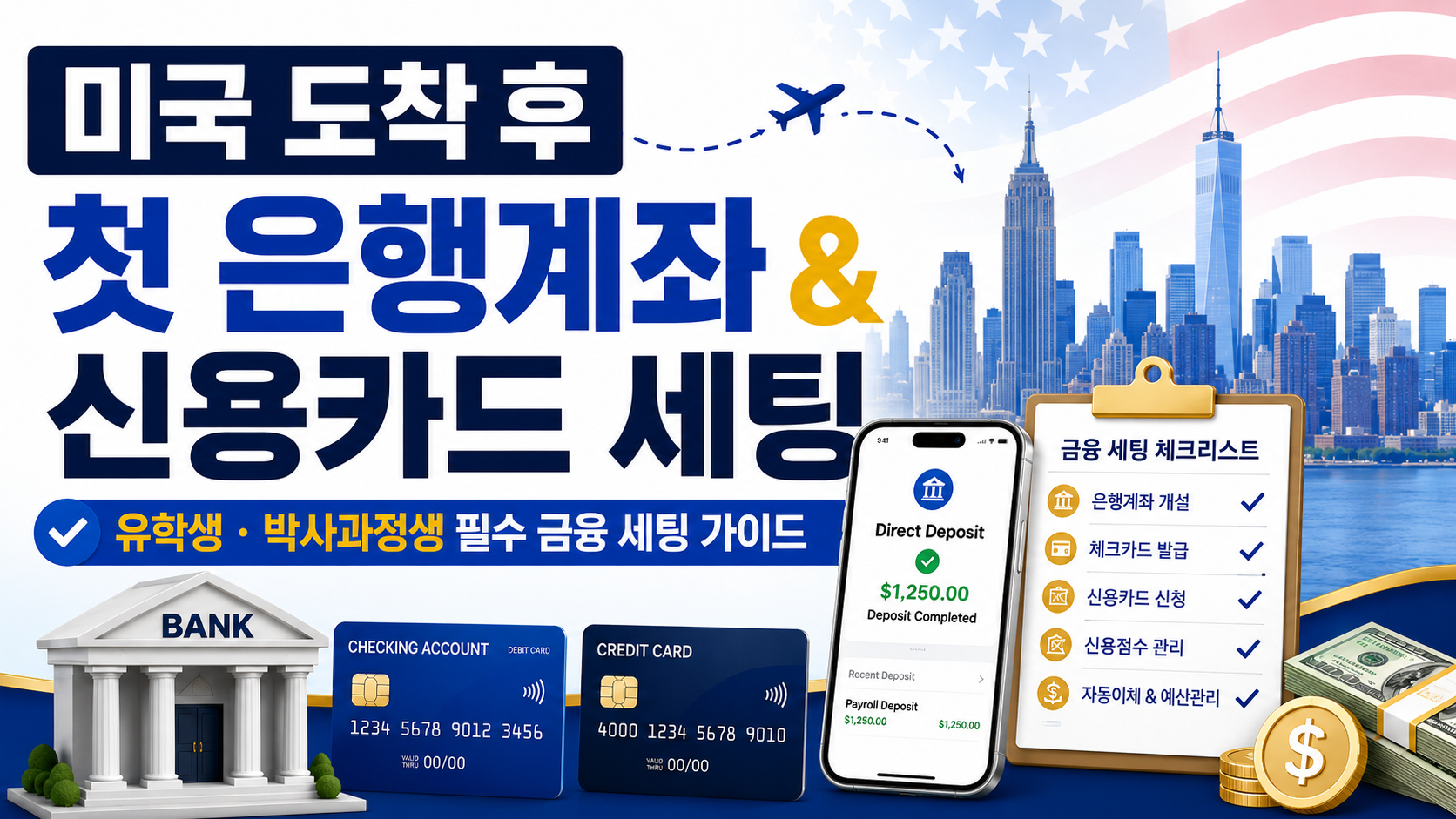
Setting Up My First US Bank Account and Credit Card
Once you land in the US, money matters come at you faster than you’d expect.
You need to pay rent, get a phone plan, buy groceries, and receive your stipend from school into a US bank account.
At first, “which card gives the most points” matters a lot less than how to reliably receive money, spend it, and start building a credit history.
This is especially true for UTSW PhD students, since most of us get a stipend — setting up a US bank account and direct deposit is basically mandatory.
To cut to the chase
Right after arriving in the US, this is the safest way to set things up:
- Open a checking account at a big bank like Chase or Bank of America
- Set up direct deposit so your UTSW stipend lands there
- Get one no-annual-fee credit card to start
- Build about six months of credit history before thinking about a second card
- Save travel cards, the miles game, and high-annual-fee cards for later
Rather than going straight for a Chase Sapphire Preferred, an Amex Gold, or an airline or hotel card, it’s better to first get safely settled into the US financial system.
1. Your first account should be a checking account
The first account you need in the US is a checking account.
A checking account is your everyday account — for depositing paychecks, paying off credit cards, rent, utilities, your phone bill, and transfers.
Rather than agonizing over comparisons between banks, it’s easier at first to just pick a large bank with physical branches and experience serving international students.
Safe bets
- Chase
- Bank of America
Either one works.
At this stage, branch accessibility, how easy the app is to use, whether you can actually open an account, and the conditions for waiving fees matter more than perks.
What to bring when you visit the bank
- Passport
- I-20
- UTSW admission letter or offer letter
- US address
- Korean address
- US phone number
- UTSW student ID, if you have one
- SSN, if you have one
- Money for the initial deposit
Some banks will let you open an account even without an SSN yet.
Requirements vary by bank, so it’s worth calling your nearest branch before you go and asking something like:
I am an international Ph.D. student at UT Southwestern.
I do not have an SSN yet.
What documents should I bring to open a checking account?
2. Once you open an account, set up direct deposit first
The first thing to do after opening a bank account is set up direct deposit so your UTSW stipend flows in automatically.
Direct deposit means your stipend or paycheck from school lands directly in your bank account instead of arriving as a paper check.
Once you open the account, make sure you have the following on hand:
- Routing number
- Account number
- Bank name
- Account type
e.g., checking account
Then you can set up direct deposit through UTSW’s payroll or PeopleSoft system.
Things to do right after opening the account
- Install the bank’s app
- Activate your debit card
- Confirm your routing number
- Confirm your account number
- Set up direct deposit
- Check when your first stipend deposit is expected
- Check the conditions for waiving the monthly maintenance fee
- Turn on card transaction alerts
Your first paycheck may arrive later than expected, so it’s a good idea to bring enough initial settling-in money to cover at least a month before you arrive.
3. Your first credit card should be one you’ll “keep for years,” not just a “good” one
In the US, a credit card isn’t just a way to pay — it’s a tool for building your credit history.
Instead of chasing a card with great points right from the start, what matters is getting a card you can hold onto for a long time without ever missing a payment.
Your first credit card serves three purposes:
- Starting your US credit history
- Building a record of paying on time every month
- Getting a first card you’ll keep open for a long time
So ideally, your first card should have these qualities:
- No annual fee
- High approval odds
- A simple rewards structure
- Easy to keep open long-term without closing it
- Usage reported to the credit bureaus
4. First-card candidates
1) Chase Freedom Rise
If you opened your checking account with Chase, a starter card like the Chase Freedom Rise is worth considering.
The upside is that your Chase account and card live in the same app, and it sets you up nicely to move to the Chase Freedom or Sapphire lineup down the road.
That said, approval can depend on whether you have little to no credit history or don’t have an SSN yet, so it’s worth talking to a branch representative.
2) Discover Student Card
This card comes up often as a recommended first card in the US.
As a student card, it’s fairly accessible early on and a solid, low-friction way to start building credit history.
That said, Discover can be accepted at fewer merchants than Visa or Mastercard, so it’s smart to carry a debit card or a Korean card as backup.
3) Secured Credit Card
If getting approved for a regular credit card is difficult, starting with a secured card is perfectly fine.
A secured card works by putting down a cash deposit, which becomes your credit limit.
Put down a $200 deposit, for example, and you get a $200-limit card.
It might feel like a step down at first, but use it responsibly without missing a payment for six months to a year, and you can graduate to a regular card.
6. How to actually use your first credit card
With your first card, using it a lot matters less than using it cleanly and paying it off well.
Recommended places to use it
- Phone bill
- Groceries
- Amazon
- Target
- Walmart
- Food near campus
- Small subscription services
You don’t need to put every big expense — rent, large furniture, expensive electronics — on your credit card from day one.
Your first card’s limit is especially likely to be low.
If your limit is $500 and you’re charging $400 at a time, that can look risky to the card issuer.
Try to stay under 10-30% of your limit, and make a habit of paying the full balance every month.
Settings you should absolutely turn on
- Turn on autopay for the statement balance
- Turn on due-date alerts
- Turn on card transaction alerts
- Don’t pay only the minimum payment
- Don’t use cash advances
- Never, ever miss a payment
The single most important thing here is paying off your statement balance in full every month.
You use a credit card to earn points — not to pay interest.
7. Hold onto your Korean card and Korean phone number for a while
Even after you set up a US account and US card, it’s best not to cancel your Korean card and Korean phone number right away.
Right after you arrive, opening a bank account or credit card might not happen immediately, and you may still need identity verification through a Korean banking or card app.
Things to check before you leave Korea
- Have two cards ready that work for overseas payments
- Enable overseas usage on your cards
- Block overseas KRW-denominated payment
- Check your card limits
- Confirm you can freeze a lost card through the app
- Confirm you can still log into your Korean banking apps
- Check your 공동인증서 (joint certificate), 금융인증서 (financial certificate), and OTP setup
- Decide whether to keep your Korean number
Canceling your Korean number can cause verification problems with Korean banks, cards, KakaoTalk, Naver, and Gov24.
If possible, it’s safer to keep it active on a cheap plan for at least a few months.
8. Apply for cards slowly
I wouldn’t recommend applying for several cards at once as soon as you land.
One card is enough to start.
A recommended timeline
First week
- Get a US phone number
- Visit Chase or Bank of America
- Open a checking account
- Receive your debit card
- Set up direct deposit
Months 1-3
- Apply for or receive your SSN
- Apply for your first no-annual-fee credit card
- Set up autopay
- Make small purchases and pay them off in full
Months 3-6
- Keep using just that first card consistently
- Keep utilization low
- Build a record with no missed payments
Months 6-12
- Check your credit score
- Consider a second no-annual-fee card
- Compare cashback structures
After year 1
- Look into travel cards
- Consider sign-up bonuses
- Consider mileage cards
- Consider taking advantage of account-opening bonuses
Early on, the number of cards you have doesn’t matter — a clean record with no missed payments does.
9. Save bank bonuses and card promotions for later
The US has plenty of checking account opening bonuses and credit card sign-up bonuses.
Used well, they can genuinely help.
But it’s better not to push too hard for them early on.
When you’re looking at a promotion, check the following:
- Is there a direct deposit requirement?
- Does your stipend count as a qualifying direct deposit?
- Is there a minimum balance requirement?
- How many months do you have to keep the account open?
- Is there a monthly fee?
- Does closing the account early claw back the bonus?
- Does it trigger a credit inquiry?
Early on, reliable stipend deposits, paying rent, fee waivers, and how easy the app is to use matter more than any bonus.
10. Skip stablecoins, crypto cards, and card cycling for now
Search around online and you’ll come across stablecoins, crypto cards, manufactured spending, business cards, and similar ideas.
I wouldn’t recommend any of this for an international student who just landed in the US.
Early on, it’s best to avoid anything that might look like suspicious activity to a bank or card issuer.
If your account gets restricted, paying rent, receiving your stipend, and managing your living expenses can all fall apart at once.
This is especially true on F-1 student status — business cards, side income, and crypto-related transactions can tie into tax or immigration-status issues, so it’s safer to be careful.
Early in your life in the US, simple beats clever.
Get paid normally, spend normally, and pay on time every month.
That’s the safest way to start.
My final recommended setup
If I were arriving in the US for the first time as a UTSW PhD student, here’s roughly how I’d set things up.
Before arrival
- Bring two Korean credit cards
- Confirm they work for overseas payments
- Keep your Korean phone number active
- Bring a small amount of cash in dollars
- Prepare your UTSW offer letter, I-20, and passport
- Sort out your US address
First week after arrival
- Get a US phone number
- Open a checking account at Chase or Bank of America
- Activate your debit card
- Set up direct deposit
- Sort out how you’ll pay rent, phone, and living expenses
After receiving your SSN
- Apply for your first no-annual-fee credit card
- Set up autopay
- Make small purchases and pay them off in full every month
- Keep utilization low
After 6 months
- Check your credit score
- Consider a second card
- Consider a savings account or high-yield savings account
- Start slowly looking at account bonuses or card promotions
After 1 year
- Look into travel cards
- Look into mileage cards
- Consider a card like the Chase Sapphire Preferred
- Think about strategies for buying a round-trip flight to Korea with points
Key takeaways
Right after arriving in the US, building a stable financial foundation comes before trying to maximize card perks.
- A Chase or Bank of America checking account is a safe first choice
- Once you open a bank account, set up direct deposit for your UTSW stipend first
- Start with a no-annual-fee credit card
- Save the Chase Sapphire Preferred or a premium Amex for later
- Hold onto your Korean number and Korean cards for a while
- Spend the first six months building a clean record with one card and no missed payments
- Save account bonuses, the miles game, and card promotions for once life has settled down
In the end, the early goal is simple.
Get your paycheck coming in reliably, keep your living expenses going out steadily, and build a clean first credit record.
Get just these three things right, and your financial setup for life in the US will be off to a pretty solid start.